Perfectly Grilled Ribeye Steak with Garlic Butter
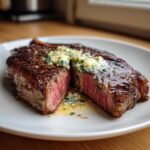
Follow these steps to grill a thick-cut ribeye steak to medium-rare perfection, complete with a flavorful homemade garlic butter.
- Prep Time: 60 min
- Cook Time: 20 min
- Total Time: 80 min
- Yield: 2 servings
- Category: Dinner
- Method: Grilling
- Cuisine: American
- Diet: Low Fat
Ingredients
Scale
- 2 (1.5-inch thick) ribeye steaks
- 2 tablespoons coarse kosher salt
- 1 tablespoon black pepper
- 1 tablespoon olive oil
- 1/2 cup (1 stick) unsalted butter, softened
- 4 cloves garlic, minced
- 1 tablespoon fresh parsley, chopped
- 1 teaspoon fresh thyme leaves
Instructions
- Remove steaks from the refrigerator 1 hour before cooking. Pat them completely dry with paper towels.
- Season both sides of the steaks heavily with kosher salt and black pepper.
- Prepare the grill for two-zone cooking: create a hot side (direct heat) and a cooler side (indirect heat). For charcoal, push coals to one side. For gas, set one side to high and the other to medium-low. Aim for a grill temperature around 450°F on the hot side.
- Mix the softened butter, minced garlic, parsley, and thyme in a small bowl to create the garlic butter. Set aside.
- Brush the steaks lightly with olive oil.
- Sear the steaks directly over the hot side of the grill for 2 to 3 minutes per side until a deep brown crust forms.
- Move the steaks to the cooler side of the grill. Close the lid and cook until the internal temperature reaches 125°F for medium-rare. This usually takes 5 to 8 minutes, depending on thickness.
- Remove the steaks from the grill when they reach 125°F internal temperature.
- Place a generous slice of the garlic butter on top of each hot steak immediately.
- Let the steaks rest uncovered on a cutting board for 10 minutes before slicing against the grain.
Notes
- For the best sear, make sure your grill grates are clean and very hot before placing the steaks down.
- If using a charcoal grill, avoid flare-ups by moving the steak away from direct flames when they occur.
- Use a reliable meat thermometer inserted into the thickest part of the steak for accurate doneness readings.
Nutrition
- Serving Size: 1 steak
- Calories: 750
- Sugar: 0
- Sodium: 1100
- Fat: 60
- Saturated Fat: 30
- Unsaturated Fat: 30
- Trans Fat: 1
- Carbohydrates: 1
- Fiber: 0
- Protein: 50
- Cholesterol: 200