

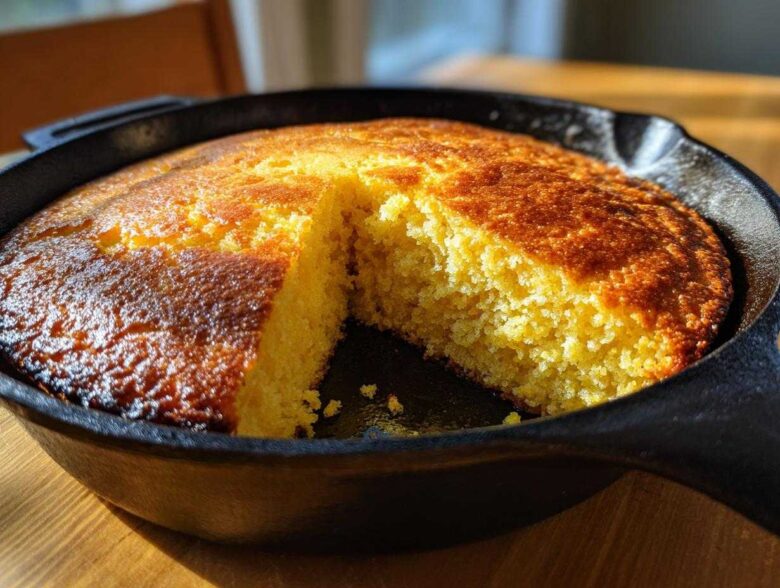
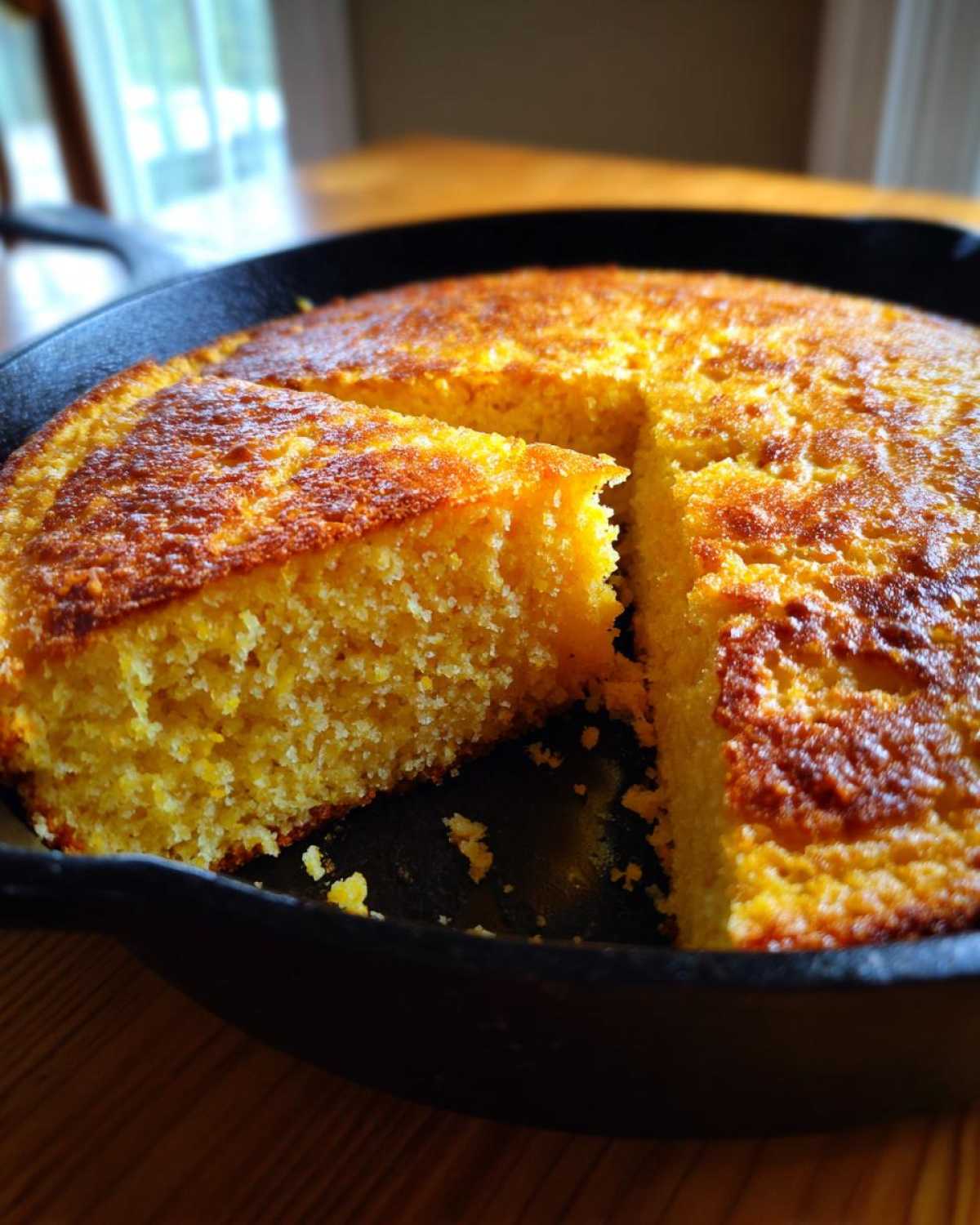
I swear, the sound of that crackling sizzle when batter hits hot fat is the best sound in my entire kitchen. Forget those dry, crumbly blocks you sometimes get; we’re past that! I spent years chasing the perfect texture: an impossibly moist interior that melts in your mouth, balanced by those deep golden, shatteringly crisp edges. This right here is my Authentic Southern Cast Iron Skillet Cornbread recipe, and yes, it has zero sugar because that’s how we roll down here. The secret weapon isn’t in the ingredients, surprisingly—it’s all in the heat. Mastering the preheated skillet technique changed everything for my simple skillet cornbread. After one batch of this, you’ll never look at cake mixes again, trust me!
Why This Classic Skillet Cornbread Recipe Works (E-E-A-T Focus)
The magic of this skillet cornbread lies in a couple of simple but crucial pairings. First, we use buttermilk. That beautiful acidity reacts instantly with the touch of baking soda we add, giving us a lift without making it taste like a biscuit. It’s the ticket to that incredibly moist moist buttermilk cornbread interior. Don’t skip the baking powder either; it works with the baking soda to create lift throughout the baking process, ensuring the middle doesn’t get gummy! For more great baking insights, you can always check out my main recipe archives.
Here’s my top tip for baking success: try to bring your buttermilk and eggs out onto the counter about 20 minutes before you start mixing. Room temperature ingredients blend more uniformly than ice-cold ones, which helps everything emulsify nicely. Trust me, a few extra minutes of planning makes a huge difference when you’re aiming for that quintessential Southern style cornbread texture.
Achieving Crispy Skillet Cornbread Edges Every Time
If you want those signature crispy skillet cornbread edges, you absolutely must preheat your cast iron skillet. I mean *hot*. When you place the skillet in the oven while it’s coming up to temperature, the metal gets blazing hot. We pour that batter right into shimmering hot bacon grease cornbread fat, and that intense initial heat shock creates an immediate crust. It’s the only way to guarantee those crunchy golden borders that Southern cooks rave about!
Ingredients for Authentic Southern Skillet Cornbread
I want you to see exactly what goes into this, because using simple, good ingredients is key for an old fashioned cornbread baking success. We’re keeping the lineup straightforward, focusing on flavor and structure. Make sure you have your cast iron skillet cornbread pan ready because having ingredients measured out beforehand is crucial!
- 1 cup yellow cornmeal
- 1 cup all-purpose flour
- 1 tablespoon baking powder
- 1 teaspoon salt
- 1/2 teaspoon baking soda
- 1 cup buttermilk (room temperature is best—take it out early!)
- 2 large eggs (also let these warm up a bit)
- 1/4 cup bacon grease, melted (ensure it is fully liquid before you measure it)
I know some of you folks might need an alternative to bacon grease; it’s traditional, but I get it! We’ve got you covered right below for swaps. Also, remember where I got my inspiration for a rich, buttery flavor? Sometimes I whip up a savory corn pudding with bacon, but for this classic bread, the measurements above are what you need.
Ingredient Substitutions for Your Skillet Cornbread
If buttermilk jumps ship on you, or if you just don’t keep it around, you can make a quick substitute: simply mix 1 cup of regular milk with 1 tablespoon of white vinegar or lemon juice. Let that sit for about five minutes until it curdles slightly—that’s your buttermilk substitute! For the fat, regular vegetable oil or melted unsalted butter works fine, but you’ll lose that signature smoky depth that bacon grease cornbread provides. Don’t even ask me about powdered egg substitutes, stick to the real deal here!
Step-by-Step Instructions for Perfect Skillet Cornbread
Okay, now for the action! This isn’t a fuss-free recipe from start to finish, but every little instruction here builds up to that amazing final result. Follow these steps precisely, especially those involving heat, and you’re going to have the best homemade cornbread recipe you’ve ever made. Don’t forget that you can find more great tips on old fashioned cornbread baking on my site too.
Preheating the Cast Iron Skillet for Crispy Skillet Cornbread Edges
This is non-negotiable for great skillet cornbread. First, put your 10-inch cast iron skillet right into the oven. Then, set your oven to preheat to 425 degrees Fahrenheit. We want all that metal, all that iron, to get screaming hot while the oven comes up to temp. When the oven hits 425, carefully pull that skillet out using thick oven mitts—I always grab mine with tongs wrapped in a dry towel for stability, just because it gets so dangerously hot! You need that skillet ready to sizzle.
Mixing the Moist Buttermilk Cornbread Batter
While the pan is heating up, we mix the batter. Whisk your dry ingredients—the cornmeal, the flour, baking powder, salt, and soda—together first in a big bowl. Then, separately, give a quick whisk to the buttermilk and eggs until they look happy together. Now, pour the wet into the dry. Pay close attention here: you only mix until they are *just combined*. Seriously, if you see a tiny streak or two of flour, stop mixing! Overmixing is the number one way to make tough, chewy cornbread instead of tender, moist buttermilk cornbread.
Tips for Success with Your Homemade Cornbread Recipe
Even with the right directions, baking is full of little character-building moments! For this skillet cornbread, I have a few extra things I always do to guarantee flavor and texture. First, scrape the sides of your bowl as you mix the batter. Seriously, those bits of unmixed flour sitting on the side can sabotage your texture, leading to those dreaded dense spots. You want everything incorporated, gentle as you go, of course.
Second, don’t be too shy with the hot fat when you grease that skillet. Remember, that screaming hot bacon grease cornbread fat creates the crust. Make sure you coat the bottom *and* let it run a little bit up the sides of the pan while you’re pouring. This ensures all the edges get that beautiful crispiness we are aiming for. This technique ensures you get a truly buttery skillet baked goods feel, even though it’s savory!
And finally, don’t rush the cooling down part! Letting it sit in the skillet for just five minutes after it comes out of the oven—no longer—allows the center to set up perfectly before you slice into it. If you try to cut it immediately, the steam escapes too fast and you end up with a slightly soggier middle. For more rustic baking inspiration, take a look at some other simple things I’ve baked here!
Variations on Classic Skillet Cornbread
While this no sugar cornbread classic is perfection on its own, I totally understand wanting to jazz things up now and then! A great homemade cornbread recipe is like a blank canvas for flavor additions. We can keep this perfectly rustic bread recipe going strong while adding some excitement.
My absolute favorite flavor boost, especially when I’m serving this as a quick cornbread side dish next to something spicy, is adding cheese and peppers. Think about stirring in about a cup of shredded sharp cheddar and maybe a quarter cup of finely diced pickled jalapeños right before you pour the batter into the hot pan. That combination of sharp cheese and spice cuts through the richness of the bacon fat beautifully. It’s just incredible when those little specks of orange and green get baked right into the crispy edges!
If you want to lean into the corn flavor even more, try swapping out cornmeal types. Instead of using only yellow cornmeal, try half yellow and half white cornmeal—white cornmeal makes the crumb a bit more tender. Honestly, if you can find some heirloom cornbread recipe cornmeal, use it! Sometimes I just use a cup of freshly ground blue cornmeal for a fun twist. Just remember, heirloom meals might require a tiny bit more liquid, so watch your batter timing.
And just for fun, if you’re maybe craving something a little sweeter one day, a quick drizzle of honey immediately after it comes out of the oven makes this skillet cornbread taste like that famous sweet cornbread with honey, but you still control the amount. It’s the best of both worlds! Speaking of great comfort sides, if you ever need a dip that pairs perfectly with cornbread scraps, check out my decadent cheesy spinach artichoke dip recipe!
Serving Suggestions for Your Skillet Cornbread
This wonderful, savory, no-sugar skillet cornbread is truly best when it’s soaking up some delicious flavor. Honestly, it’s the perfect spongy foil for anything saucy! Naturally, the number one way I serve this is alongside a huge bowl of hearty chili. I wrote down exactly why this batch is the best cornbread for chili on the blog—you need that crispy edge to withstand the broth!
But don’t stop there! This bread is phenomenal crumbled over saucy smoked greens, like collards or mustard greens, or served warm alongside a big pot of savory stew. Don’t forget a smear of good softened butter, even with the bacon grease already in there. It just melts right down into those warm nooks and crannies. It’s the definition of comfort food!
Storage and Reheating Instructions for Buttery Skillet Baked Goods
Now, let’s talk about leftovers, because getting this skillet cornbread to last more than five minutes in our house is a feat! Once this glorious, buttery skillet baked goods creation has cooled completely—and I mean completely, because warm bread creates steam and steam makes mush—you need to seal it up tight. I always use a large zip-top bag or an airtight plastic container.
You can keep this homemade cornbread recipe on the counter for two days, max. If you need it to last longer, tuck that sealed container into the fridge. It definitely holds up well for close to a week that way, though the edges won’t be quite as sharp anymore, which is a shame, I know!
But here’s the real secret to bringing those amazing crispy skillet cornbread edges back to life: reheating it in the skillet! Don’t microwave it—that’s a death sentence for crispness. Instead, put a tiny half-teaspoon of extra bacon grease (or butter, if you’re out) back into your clean cast iron skillet. Heat that skillet over medium-low heat on the stovetop until that fat is shimmering again. Then, gently lay your square of cornbread right into the hot fat. Let it sit for just two or three minutes per side. It gets hot, fragrant, and those edges crisp right back up! If you don’t want to mess with the stovetop, pop a slice into a toaster oven for about four minutes; that dry heat works wonders, too.
Frequently Asked Questions About Skillet Cornbread
I’ve answered so many emails and comments over the years about what goes wrong when folks try their first skillet cornbread batch. It’s usually just one little step they missed! Here are the questions I get asked the most when people are trying to master that perfect texture.
Why is my cornbread dense or heavy instead of light and moist?
Nine times out of ten, that heaviness is from overmixing! I keep telling everybody: stop stirring when you see just a few streaks of dry flour left in the bowl. Once you add the liquid to the dry ingredients, you’re developing gluten, and too much gluten means a tough, dense bread instead of a tender easy skillet bread recipe. Remember what I said about mixing until ‘just combined’? That is the golden rule for avoiding cement!
Can I use white cornmeal instead of yellow cornmeal in this recipe?
Yes, you absolutely can! If you substitute white cornmeal for the yellow cornmeal, your resulting Southern style cornbread will be a bit paler in color, and some people feel it develops a slightly milder, less pronounced corn flavor. Yellow cornmeal gives you that gorgeous, deep golden color that we associate with hearty, homemade cornbread recipe baking. Either way, it’ll still taste amazing, especially with the bacon grease doing its job!
How do I clean my cast iron skillet after making this bacon grease cornbread?
Oh, cleaning cast iron is serious business, but it’s easy once you know the drill. Never, ever soak your skillet or run it through the dishwasher—that rusts it right out! After the cornbread has cooled a bit, gently scrape out any stuck-on bits with a plastic scraper or a soft sponge. Don’t use steel wool unless you are trying to re-season it completely. Rinse it hot, dry it right away with a towel, and then—this is key—put it back on the stove over low heat for a minute just to ensure every bit of moisture evaporates. Then, take a paper towel dipped in a tiny bit of oil (or save some of that bacon grease!) and wipe the inside down before storing it. That keeps your seasoning perfect for the next batch of skillet cornbread!
Why didn’t my cornbread rise like it was supposed to?
If your moist buttermilk cornbread didn’t get that beautiful lift, check your chemical leaveners. Baking soda and baking powder do go stale over time, especially if they’ve been sitting open in a humid pantry. If they are old, they won’t react with the buttermilk to produce the necessary CO2 bubbles. I always test my baking soda by dropping a tiny pinch into white vinegar—it should hiss and bubble like mad! If it doesn’t, toss it out and grab a fresh container. This often happens when folks try to keep their supplies around forever.
For more tips on keeping your baking ingredients fresh, feel free to check out my guide on finding the right proportions for an easy skillet bread recipe anytime!
Nutritional Estimates for This Classic Recipe
I always get asked about the nutrition, especially since we’re keeping this skillet cornbread savory and free of that added sugar. Now, you have to remember that this is a rustic, old-fashioned recipe, so these numbers are my best guess based on the exact ingredients listed above. I’ve done my best to calculate them, but remember that things like how much you trim off your bacon fat can change things slightly. For the official breakdown, you can always read my general nutritional disclaimer.
This breakdown is based on yielding 8 healthy slices—if you cut smaller pieces, those numbers obviously change!
- Serving Size: 1 slice
- Calories: 210
- Sugar: 1g (Yes, only 1 gram! That’s the payoff for skipping the cup of sugar!)
- Sodium: 350mg
- Fat: 11g
- Saturated Fat: 4g
- Unsaturated Fat: 7g
- Trans Fat: 0g
- Carbohydrates: 24g
- Fiber: 1g
- Protein: 5g
- Cholesterol: 55mg
It keeps the fat content high because we are using real bacon grease and buttermilk, which is exactly what gives this homemade cornbread recipe that rich flavor and those amazing textures. It’s not a diet food, it’s comfort food, but at least you know exactly what’s going into it!
PrintAuthentic Southern Cast Iron Skillet Cornbread

Make classic Southern cornbread with crispy edges and a moist interior using a preheated cast iron skillet and bacon grease.
- Prep Time: 10 min
- Cook Time: 25 min
- Total Time: 35 min
- Yield: 8 servings
- Category: Side Dish
- Method: Baking
- Cuisine: Southern American
- Diet: Vegetarian
Ingredients
- 1 cup yellow cornmeal
- 1 cup all-purpose flour
- 1 tablespoon baking powder
- 1 teaspoon salt
- 1/2 teaspoon baking soda
- 1 cup buttermilk
- 2 large eggs
- 1/4 cup bacon grease, melted (plus extra for greasing the skillet)
Instructions
- Preheat your oven to 425 degrees Fahrenheit. Place a 10-inch cast iron skillet in the oven while it preheats.
- In a large bowl, whisk together the cornmeal, flour, baking powder, salt, and baking soda.
- In a separate bowl, whisk the buttermilk and eggs together.
- Pour the wet ingredients into the dry ingredients and mix until just combined. Do not overmix.
- Carefully remove the hot skillet from the oven. Add 2 tablespoons of bacon grease to the hot skillet and swirl to coat the bottom and sides. The grease should be shimmering.
- Pour the batter immediately into the hot, greased skillet.
- Return the skillet to the oven and bake for 20 to 25 minutes, or until the top is golden brown and a toothpick inserted into the center comes out clean.
- Let the cornbread cool in the skillet for 5 minutes before slicing and serving.
Notes
- For extra crispy edges, ensure your skillet is very hot before adding the batter.
- You can substitute the bacon grease with 1/4 cup of vegetable oil or unsalted butter, but bacon grease provides the traditional flavor.
- If you prefer a slightly sweeter cornbread, add 1 tablespoon of honey to the wet ingredients.
Nutrition
- Serving Size: 1 slice
- Calories: 210
- Sugar: 1
- Sodium: 350
- Fat: 11
- Saturated Fat: 4
- Unsaturated Fat: 7
- Trans Fat: 0
- Carbohydrates: 24
- Fiber: 1
- Protein: 5
- Cholesterol: 55