

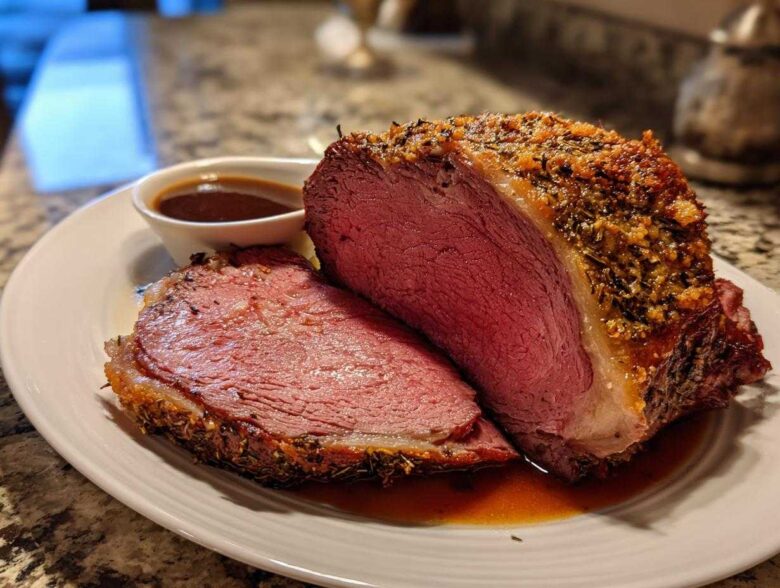
When the holidays roll around, or when we just need a centerpiece that screams ‘special occasion,’ honestly, nothing beats a spectacular roast. For years, people have asked Jun (Spoon) and me (Sprout) for the secret to our magic. This prime rib recipe isn’t just a list of steps; it’s where Spoon’s love for deep, traditional cooking meets my need for bright, fresh flavors, resulting in the ultimate showstopper.
We call this one The Ultimate Easy, Oven-Roasted Herb Crusted Prime Rib with Au Jus. It might sound fancy, but trust me, this method is surprisingly foolproof, giving you that rich, succulent texture every single time. It’s designed to deliver that melt-in-your-mouth sensation without demanding you stand over the oven all day.
Why This Prime Rib Recipe Delivers a Melt in Your Mouth Roast
I know the biggest fear people have when preparing a beautiful prime rib roast recipe is ending up with dry, grey meat. That’s where we step in! Spoon always emphasizes that a truly tender beef roast relies on managing both the outside and the inside temperature perfectly.
This particular method guarantees that rich, melt in your mouth roast you dream about:
- It locks in all those beautiful beef juices early on.
- The herb crust seals in flavor without drying out the exterior.
- You get that gorgeous, rosy center that looks incredible when sliced.
Achieving the Perfect Prime Rib Temperature
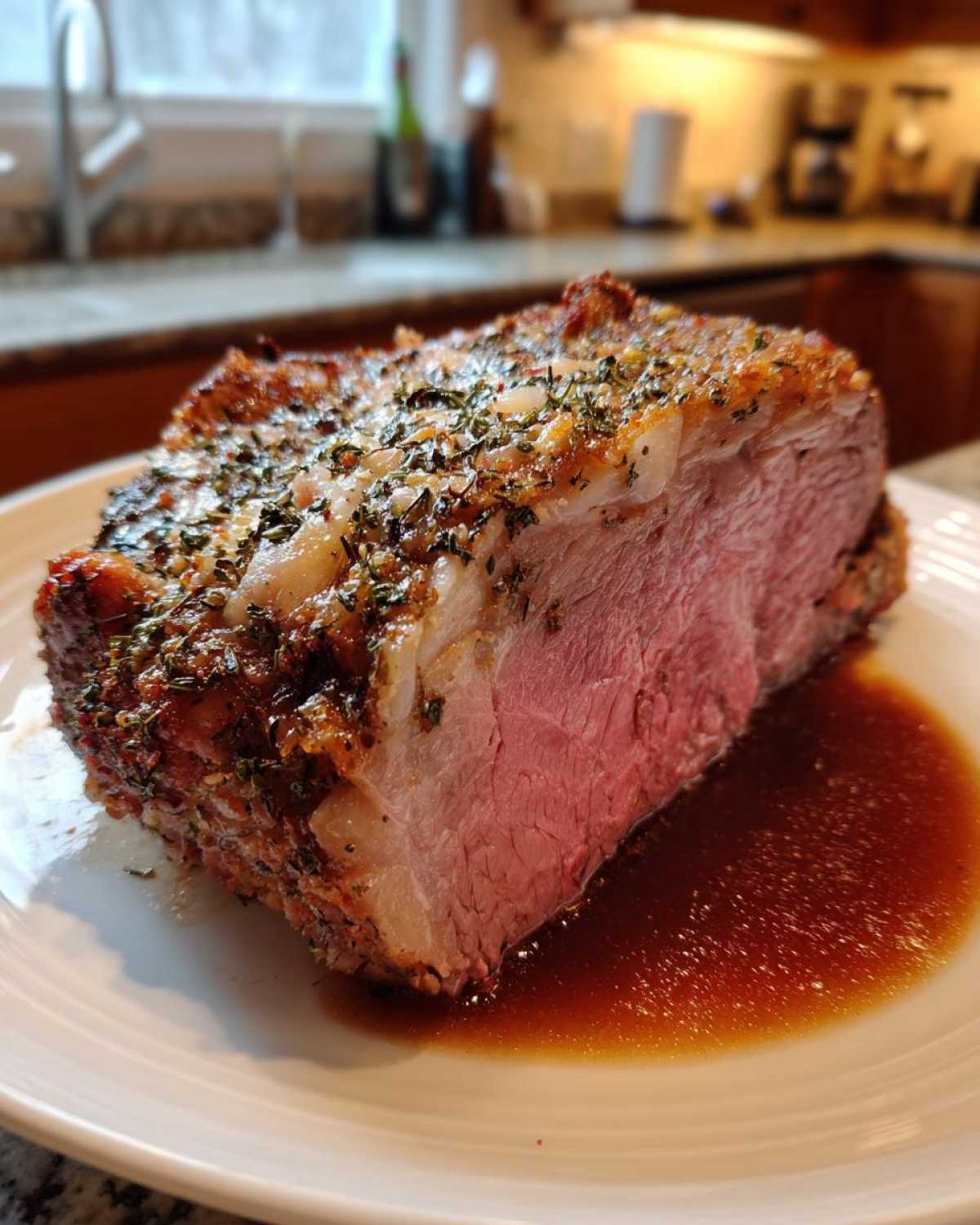
The magic here is not just seasoning; it’s baking science! We use a two-stage temperature attack. First, we blast that fatty exterior at 450 degrees F for just 15 minutes. That high heat starts forming that incredible crust right away.
Then, we drop it down to 325 degrees F to gently cook the inside. You absolutely must trust your meat thermometer for a perfectly cooked prime rib. Guessing simply won’t cut it when dealing with a roast this special. Pull it exactly when it hits the target—the carryover cooking during the rest does the final step for you!
Gathering Ingredients for Your Herb Crusted Prime Rib
This prime rib recipe really shines when you source the best ingredients you can find. Since the roast itself is the star, you don’t need a million things to dress it up! We’re keeping the list short and impactful, focusing on good meat for that amazing eventual herb crusted prime rib.
Here’s what you’ll need. Make sure your meat is bone-in if you can swing it—Spoon insists the bones help insulate and keep the roast moister!
- 1 (5-7 pound) bone-in prime rib roast (about 2 ribs)
- 2 tablespoons coarse kosher salt
- 1 tablespoon black pepper
- 1 tablespoon garlic powder
- 1 tablespoon onion powder
- 1 tablespoon dried rosemary
- 1 tablespoon dried thyme
- 4 cloves garlic, minced
- 2 tablespoons olive oil
- 1 cup beef broth (for au jus)
- 1 tablespoon cornstarch mixed with 2 tablespoons cold water (for au jus slurry)
Ingredient Notes and Substitutions
If you have a thriving herb garden like I do, Sprout highly recommends using fresh rosemary and thyme! Just use a little more, maybe a tablespoon and a half of each, chopped very finely. They give the crust an unbelievable fragrance as it roasts!
Spoon says that while boneless works in a pinch, the bones add structure and flavor retention. If you use a boneless cut, just remember it will cook faster than our timed estimates, so you have to watch that meat thermometer even more closely!
Easy Prime Rib Instructions: Step-by-Step Oven Roasted Prime Rib
Alright, now for the action! This is where we turn those lovely ingredients into a stunning prime rib recipe centerpiece. Don’t let the look intimidate you; these easy prime rib instructions are built around clear timing milestones. First things first: pull that magnificent roast out of the fridge about three hours before you plan on cooking it. It needs to relax and warm up just a little bit first!
Once it’s happy at room temperature, crank your oven up to 450 degrees F for the initial sear. Keep an eye on the clock, because after just 15 minutes, we switch gears and dramatically lower the oven temperature to 325 degrees F for the main slow roast. This two-step dance is how we guarantee that heavenly crust while keeping the inside unbelievably succulent. If you’re planning on serving some creamy sides, maybe check out my recipe for roasted garlic cauliflower mash to go alongside it!
Preparing the Best Prime Rib Seasoning Rub
This part is so satisfying! Before anything touches the meat, you’re combining all your dried herbs and spices—that’s the best prime rib seasoning right there. Make sure you rub that minced garlic and olive oil all over the roast first. Think of it like liquid glue. Then, and this is where Spoon gets very meticulous, you take your dry rub and press it on firmly. You want a thick, crunchy, fragrant layer coating every square inch. Don’t be shy with the rub!
The Crucial Resting Period for a Juicy Prime Rib Dinner
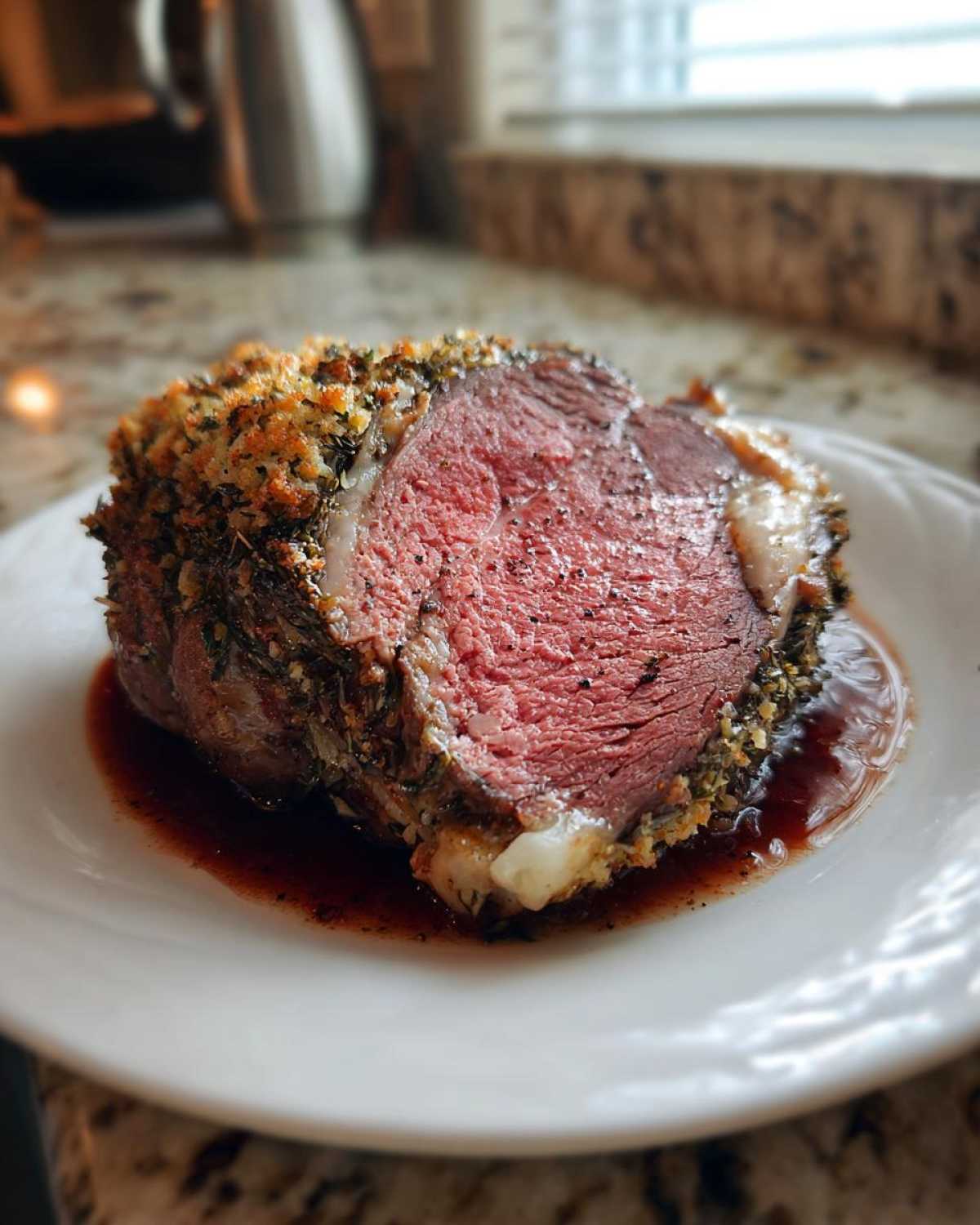
Once the thermometer tells you it’s done—and please, trust the thermometer!—pull that roast out. Now, this next step is non-negotiable if you want a juicy prime rib dinner. Tent it loosely with foil and walk away for a minimum of 20 minutes. Seriously, don’t slice it! When meat cooks, the juices rush to the center. If you cut it right away, all that expensive, savory moisture just runs right out onto your cutting board.
Resting lets those juices redistribute throughout the muscle fibers. This simple 20 minutes is the single most important action you take to ensure you know how to make prime rib not dry. It’s the difference between good and unbelievably fantastic!
Creating the Perfect Prime Rib with Au Jus
We’ve got a beautiful roast resting, and that roasting pan is full of liquid gold—those drippings are the base for our incredible prime rib with au jus! Do NOT throw those bits away. This is how we elevate the whole oven roasted prime rib experience to restaurant quality.
First, take that pan over to the stovetop. Put it over medium heat. You’ll notice a thick layer of fat floating on top of the drippings. You need to skim off most of that excess fat—Spoon usually uses a big spoon to scoop it right out and toss it in the trash. We want the flavor, not all the extra grease!
Next, pour in that beef broth and let it bubble up, scraping up all those intensely flavorful brown bits stuck to the bottom of the pan. That’s where the deep beef flavor lives. Finally, whisk in that little slurry of cornstarch and cold water. It thickens right up, and there you have it: a simple, velvety sauce ready to pour over every slice!
Tips for Success with Your Prime Rib Roast Recipe
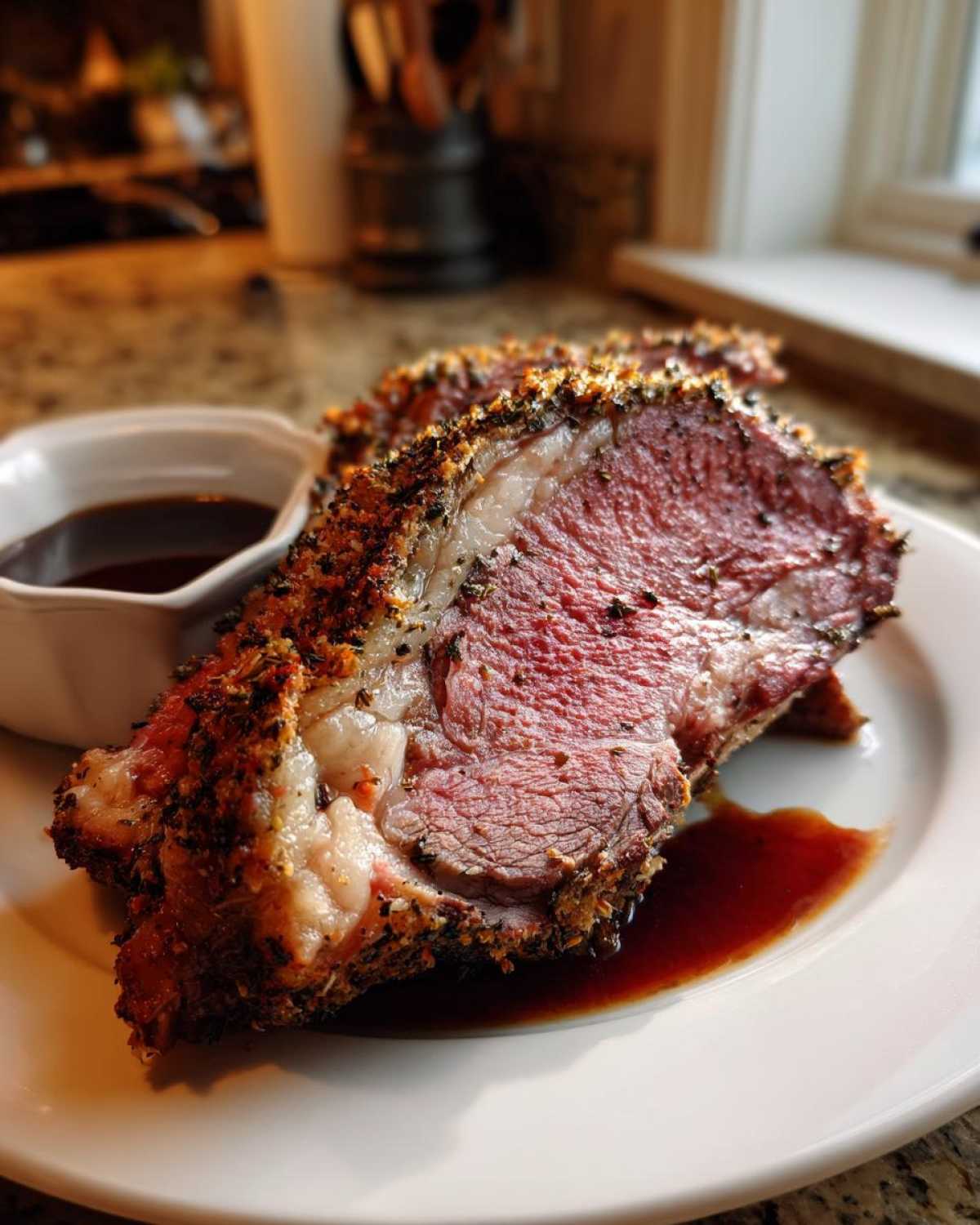
Even with the best oven roasted prime rib recipe in hand, the final temperature is the gatekeeper to perfection. If you’re trying this as a beginner prime rib recipe, knowing your numbers takes away all the worry. Remember, the roast always keeps cooking for a few degrees after you pull it out, which is called carryover cooking. That’s why we pull it early!
Spoon always tells people: never trust the clock; trust the thermometer. This takes the guesswork out of feeding a crowd for your holiday feast main course.
Temperature Guide for Perfectly Cooked Prime Rib
Here is the guide we live and die by when deciding if the roast is ready to rest. Pull the roast when it hits the *Target Pull Temp*, because it will climb another 5 degrees while it rests!
- Rare: Pull at 120°F (Ideal for the purest flavor).
- Medium-Rare: Pull at 125°F (This is usually our preferred sweet spot).
- Medium: Pull at 130°F (It will get slightly firmer, but still tender).
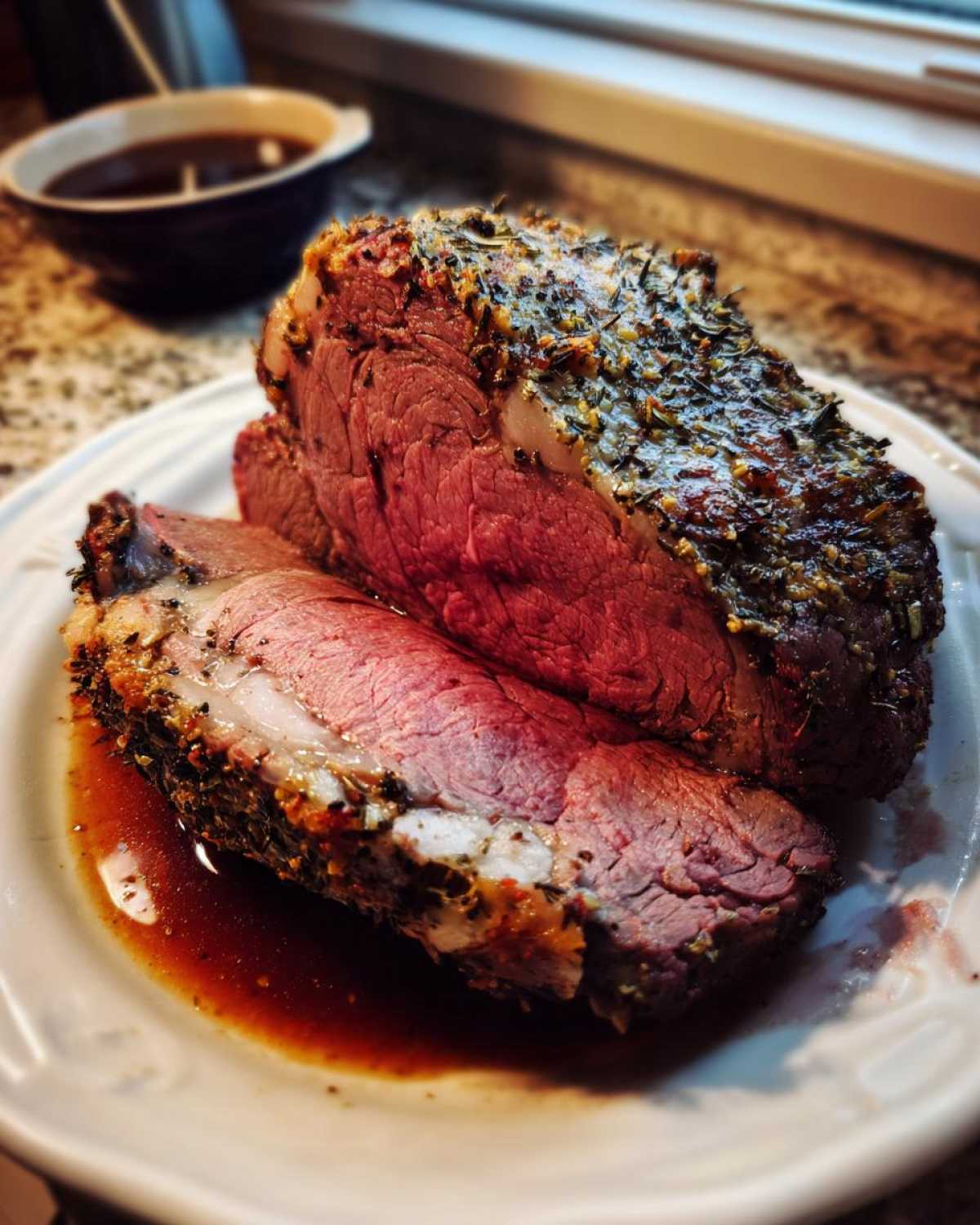
If you happen to have a massive roast, say over 12 pounds, we sometimes switch gears entirely and use a true slow roasted prime rib method—start at 225 degrees F for hours, and then blast it at the end. But for this standard size, the high-then-low method described works beautifully! You can read more about some of our kitchen philosophies over on our main hub.
Serving Suggestions for Your Holiday Roast Recipe
When you finally pull that glorious, herb-crusted creation from the oven, you need sides that can stand up to such a magnificent holiday feast main course! You don’t want anything too fiddly stealing attention away from the main event, but you do want things that complement that rich beef flavor. Jun always says the whole meal should feel complete, not overwhelming.
For a starch that shines brighter than mashed potatoes (though those are great too!), I highly recommend a creamy Parmesan risotto. It soaks up the au jus just perfectly without being heavy. On the green side, keep it crisp and bright. My favorite pairing is my Green Bean Almondine with Lemon—the slight tang of lemon cuts right through the richness of the beef. These sides make this an unforgettable impressive beef dinner!
Storage and Reheating Instructions for Leftover Prime Rib
Oh goodness, we rarely have leftovers when we make this roast, but when we do, we treat them like treasure! For any of your amazing tender beef roast bits, the absolute key is slicing it thinly against the grain first. Don’t store it in thick chunks!
Pack the slices tightly in an airtight container. For reheating, never microwave it hot! Use a low oven or even a steamer for just a minute or two to warm it through gently. And please, never forget that gorgeous prime rib with au jus we made—store that separately. Reheat the au jus gently on the stovetop until it’s piping hot, then pour a little over your warmed slices—it brings everything right back to life!
Frequently Asked Questions About This Prime Rib Recipe
These are the questions I always get asked after Easter or Christmas when everyone is buzzing about the amazing roast! It’s wonderful seeing so many people try this prime rib recipe for the first time and succeed. Let’s tackle a few common ones so you feel totally prepared!
Can I use a boneless prime rib roast instead?
Yes, you absolutely can! Spoon doesn’t love skipping the bone, but sometimes the store only has the boneless cut, or maybe you aren’t cooking for a huge crowd. The main thing to remember when you switch from a bone-in cut is that the boneless roast cooks slightly faster, usually about 5-7 minutes less per pound. Since there’s no insulating bone, the heat transfers more directly to the meat. Always double-check that internal temperature early if you swap cuts!
How do I achieve a restaurant style prime rib crust?
Getting that deep, dark, flavor-packed crust—that’s what makes it feel like a restaurant style prime rib, right? Our method is designed for this! That initial 15 minutes at 450 degrees F is non-negotiable; that super hot blast sets the crust quickly. For an even deeper color (and maybe a final safety check!), once the roast is resting, you can briefly place it under the broiler for 60 to 90 seconds. Watch it like a hawk, though! Broilers are aggressive, and you don’t want to burn that beautiful herb work we did.
What is the difference between prime rib and ribeye?
This is a classic confusion, but it’s easy to clear up! Think of it this way: Prime Rib is the entire primal cut from the rib section of the steer, before it’s cut down. It’s typically roasted whole, often bone-in, as in our oven roasted prime rib recipe. A Ribeye steak, on the other hand, is what you get when you slice a single serving steak *from* that exact same primal cut. So, the flavor is identical, but the preparation method—roast versus individual sear—is what changes the name!
Sharing Your Impressive Beef Dinner
Now comes the best part for me, Sprout! I’ve shared all of Spoon’s secrets and my own little touches for making the most tender, flavorful roast you can imagine. But honestly, the greatest joy comes from hearing about your table and seeing the spread you’ve created!
Did this impressive beef dinner become the star of your Christmas table this year? Did you manage to keep your secrets about how easy the process actually was? I truly love it when you take one of our treasured recipes and make it your own.
Please take a moment and tell us how it went! Hop over to our contact page or just leave a comment right below this post. Rate the recipe for us—was it a five-star win? We read every story and every comment, and there’s nothing better than knowing we helped bring a little happiness (and a whole lot of delicious beef!) to your special occasion.
Happy cooking, from our Spoon & Sprout kitchen to yours!
PrintThe Ultimate Easy, Oven-Roasted Herb Crusted Prime Rib with Au Jus
Achieve a perfectly cooked, tender, and juicy prime rib roast every time you make this easy, herb-crusted recipe. It is the ideal centerpiece for your holiday feast or special gathering.
- Prep Time: 20 min
- Cook Time: 3 hr 30 min
- Total Time: 4 hr 50 min
- Yield: 6-8 servings
- Category: Dinner
- Method: Oven Roasting
- Cuisine: American
- Diet: Low Calorie
Ingredients
- 1 (5-7 pound) bone-in prime rib roast (about 2 ribs)
- 2 tablespoons coarse kosher salt
- 1 tablespoon black pepper
- 1 tablespoon garlic powder
- 1 tablespoon onion powder
- 1 tablespoon dried rosemary
- 1 tablespoon dried thyme
- 4 cloves garlic, minced
- 2 tablespoons olive oil
- 1 cup beef broth (for au jus)
- 1 tablespoon cornstarch mixed with 2 tablespoons cold water (for au jus slurry)
Instructions
- Remove the prime rib roast from the refrigerator 3 hours before cooking. Let it sit at room temperature.
- Preheat your oven to 450 degrees Fahrenheit.
- In a small bowl, combine the kosher salt, black pepper, garlic powder, onion powder, dried rosemary, and dried thyme. This is your best prime rib seasoning.
- Rub the minced garlic and olive oil all over the surface of the roast.
- Press the herb and spice mixture firmly onto all sides of the roast to create an herb crusted prime rib.
- Place the roast, fat side up, in a roasting pan with a rack.
- Roast at 450 degrees Fahrenheit for 15 minutes. This high heat helps create the crust.
- Reduce the oven temperature to 325 degrees Fahrenheit. Continue roasting until the internal temperature reaches your desired doneness (use a meat thermometer for a perfectly cooked prime rib): 125 degrees Fahrenheit for rare, 130-135 degrees Fahrenheit for medium-rare. This usually takes about 13-15 minutes per pound after the initial high heat.
- Remove the roast from the oven when it hits 5 degrees below your target temperature.
- Tent the roast loosely with foil and let it rest for at least 20 minutes before slicing. This resting period is key to a juicy prime rib dinner.
- While the roast rests, prepare the au jus. Place the roasting pan drippings over medium heat on the stovetop. Skim off excess fat.
- Pour the beef broth into the pan and bring to a simmer, scraping up any browned bits from the bottom.
- Whisk in the cornstarch slurry and simmer until the au jus thickens slightly.
- Slice the prime rib roast against the grain and serve immediately with the warm au jus.
Notes
- For a bone-in roast, calculate the cooking time based on the weight of the roast, not just the meat.
- If you prefer a restaurant style prime rib, you can sear it in a very hot cast iron skillet before putting it in the oven, if the roast fits.
- If you are cooking a very large roast, consider using the slow roasted prime rib method by starting low and finishing high.
Nutrition
- Serving Size: 6 oz cooked meat
- Calories: 450
- Sugar: 0
- Sodium: 450
- Fat: 30
- Saturated Fat: 12
- Unsaturated Fat: 18
- Trans Fat: 0
- Carbohydrates: 1
- Fiber: 0
- Protein: 40
- Cholesterol: 140