

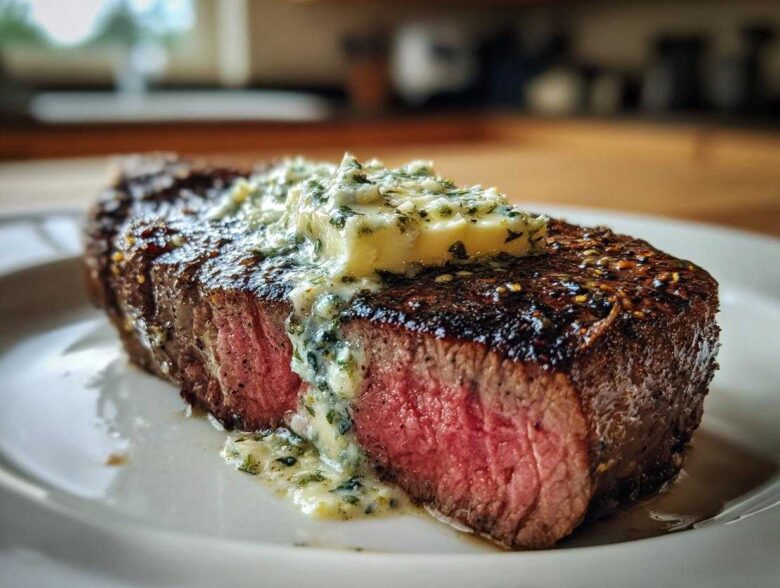
Forget those expensive steakhouse bills! Seriously, you can absolutely nail that perfect, restaurant-quality steak right here in your backyard. I used to stress out about grilling a thick ribeye, always ending up with that frustrating ring of overdone meat around a raw center. Ugh! But trust me, once I learned the two-zone grilling method, everything changed. This technique is the absolute secret weapon for achieving that incredible, dark, crispy sear while keeping the inside exactly where you want it—think juicy and pink edge-to-edge. We’re going to walk through this together, starting with the absolute must-haves for your Perfectly Grilled Ribeye Steak with Garlic Butter. If you’re looking for more awesome dinner ideas, check out my collection of recipes right here.
Selecting and Preparing Your Ribeye for Perfectly Grilled Ribeye Steak with Garlic Butter
Listen, if you start with a thin, sad piece of meat, no amount of grilling magic will save it. For this recipe, we need a serious steak—think thick-cut, at least an inch and a half. That thickness is crucial for our thick cut ribeye grilling guide because it gives us time to develop that amazing crust before the inside overcooks. Look for fantastic marbling; those little white veins of fat are flavor gold, and they melt right into the meat while it cooks.
Once you’ve got your beautiful steaks, you absolutely must take them out of the fridge an hour before they hit the heat. Then comes the most important physical step: drying them off! Grab a stack of paper towels and blot, blot, blot until the surface feels almost tacky. Wet meat steams; dry meat sears. That’s the science talking!
The Importance of Seasoning Steak Before Grilling
Once they’re dry, we season like we mean it. Don’t be shy with the coarse kosher salt and fresh black pepper. I mean *heavy*. Some folks worry about it being too salty, but trust me, most of that salt just falls off, and what stays sinks in. The salt actually helps draw moisture out initially, which sounds bad, but that moisture dissolves the salt and then gets reabsorbed into the steak. This process is called dry brining, and it’s the real key to that shatteringly crisp crust we’re after. I much prefer coarse kosher salt over fine table salt because the coarse grains create little peaks that crisp up beautifully on the grill surface.
Making Homemade Garlic Butter for Perfectly Grilled Ribeye Steak with Garlic Butter
Okay, while your grill is heating up, we tackle the absolute best part: the topping! Forget pre-made stuff; making homemade garlic butter for steak is so easy and it levels up your entire dish instantly. We need one full stick of butter, and it has to be softened—not melted, just soft enough that you can poke your finger right into it. Get that butter into a bowl with about four cloves of garlic that you’ve minced up super fine.
I add a good shower of fresh parsley and a pinch of thyme leaves because that bright green color just screams quality! Mix everything together gently with a rubber spatula until it’s just combined. I always make this first so the flavors have a tiny bit of time to marry while I focus on the fire. If you love garlic butter in other recipes, you might want to check out my shrimp scampi sauce; same great flavor principle!
Herb Infused Compound Butter Variations
If you’re feeling like switching things up next time, you can totally tailor this topping. This is where your herb infused compound butter comes into play! If you aren’t huge on thyme, try swapping it out for some finely minced rosemary and maybe a little pinch of red pepper flakes for a tiny kick. The key is always using fresh, vibrant herbs so your butter tastes bright against that rich, charred steak.
How to Grill Perfect Ribeye Steak with Garlic Butter Using Two-Zone Heat
Alright, this is where we put all that prep work to the test! Learning how to grill perfect ribeye really boils down to mastering heat zones. You need two areas on your grill: one screaming hot zone for searing and one cooler zone for finishing the cook. If you’re using charcoal, just push all the hot coals over to one side; that’s your direct heat. For a gas grill, set one entire side to high and the other to medium-low or even off. You are aiming for that hot zone to hit about 450°F—nice and hot!
Remember that olive oil we mentioned? Brush just the tiniest bit onto the seasoned steaks right before they go on. You don’t want them swimming in oil, just enough to help conduct that beautiful heat. We are going in hot and fast for the crust!
Achieving Steak Crust Through High-Heat Searing
Make sure those grill grates are sizzling hot—if you sprinkle a drop of water and it vanishes instantly, you’re ready! Lay the steaks directly over the hottest part of the flame. We are looking for serious contact here. You only flip them once, keeping them there for about two to three minutes per side. We only want to do this long enough to get that deep mahogany brown color for that perfect achieving steak crust. Don’t poke or prod them while they are searing!
Finishing the Perfectly Grilled Ribeye Steak with Garlic Butter Indirectly
Once you’ve got that gorgeous crust on both sides, it’s time to pull the temperature back. Move the steaks over to the cooler, indirect side of the grill. Close that lid down! This is where the magic happens quietly. The low, slow heat will gently bring the center up to temperature without burning the exterior. Keep a close eye on your thermometer; we’re just coaxing them up now toward that perfect medium-rare finish. We’ve got a great resource on charcoal grilling steak tips if you’re working with briquettes!
Internal Temperature Guide for Perfectly Grilled Ribeye Steak with Garlic Butter
This is the part that separates the amateur backyard griller from the person serving restaurant quality steak at home: knowing exactly when to pull your meat off the heat. Forget guessing games or cutting into the steak to check; you absolutely need a reliable instant-read meat thermometer. It’s the most important tool for mastering the internal temperature guide for steak.
For that perfect medium-rare, we are looking to pull the steak off the grill when the thermometer reads 125°F. I know, I know, that sounds underdone! But this is where carryover cooking comes in. The heat trapped inside the thick cut keeps cooking the meat for several minutes after it leaves the fire. If you wait until it hits 130°F or 135°F on the grill, you’ll end up with dry meat by the time you cut into it later. Pull it at 125°F, let it rest like we’ll discuss next, and you’ll get spectacular results every single time. If you need a handy reference, I’ve put together a quick ribeye cooking times chart that might help you plan!
The Essential Resting Period for Your Perfectly Grilled Ribeye Steak with Garlic Butter
Okay, look, this is the step people try to skip when they are starving, but if you skip the rest, you undo all the hard work you just did over that hot fire! This is my non-negotiable rule for achieving that **restaurant quality steak at home**.
When the steak comes off the grill at 125°F, all those muscle fibers are tight and tense, basically trying to squeeze every delicious, smoky juice out onto your cutting board. If you cut into it right away, those juices—which are rich with flavor and keep the steak moist underneath that amazing crust—will just run everywhere. That leaves you with a drier steak, unfortunately.
What we need is about 10 minutes. I just set mine right on the cutting board. Don’t tent it with foil! Covering it traps steam, and that steam will soften that perfect crust we worked so hard to build. Just let it sit there, uncovered, for a full 10 minutes. During this time, those fibers relax, and the juices redistribute evenly back into the meat. It’s pure structural magic! When you finally slice into it after that rest, every piece stays perfectly tender and juicy.
Serving Your Restaurant Quality Steak at Home
The moment of truth has arrived! After that glorious 10-minute rest, your **Perfectly Grilled Ribeye Steak with Garlic Butter** is ready to shine. This is where you really impress your guests and finally achieve that **restaurant quality steak at home** feeling.
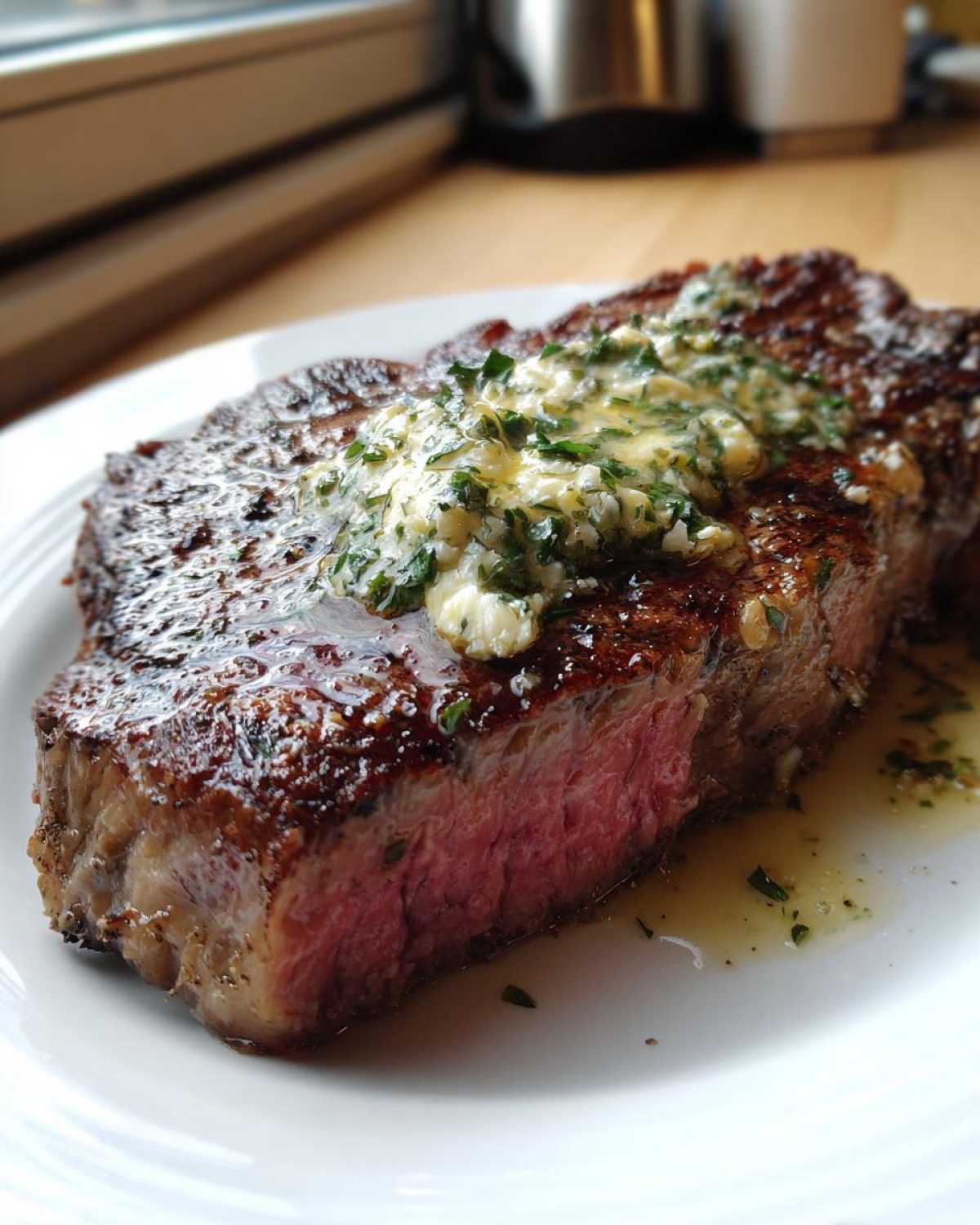
Before you grab that knife, remember the cutting technique—it matters just as much as the grill time! You must always slice the steak *against* the grain. I learned this the hard way when I first tried slicing my steak right along the muscle fibers. It felt tender when I cut it, but when I chewed it, it was tough and chewy. Take a second to look at the surface: you’ll see lines running through the meat. You want your knife going perpendicular to those lines. This shortens the fibers, making every bite incredibly tender.
Once sliced, lay those beautiful pink pieces out on a platter or individual plates. Now for the grand finale! Remember that gorgeous mound of **herb infused compound butter** we made earlier? Grab a generous slice—maybe a quarter of the stick per steak—and set it right on top of the hot meat. The heat from the steak will immediately melt that butter, letting the garlic and herbs run down into every crack and crevice. That herby, garlicky pool is the perfect sauce. If you need more ideas using that delicious garlic flavor, be sure to check out my favorite garlic butter steak recipe!
Troubleshooting Common Perfectly Grilled Ribeye Steak with Garlic Butter Issues
Even when you follow the steps perfectly, sometimes the grill gods aren’t cooperating! Don’t panic if something weird happens; the beauty of this method is that we have built-in safety nets. For example, if you see flames licking up around the edges of your steak while it’s searing, that’s a flare-up. It means rendered fat dripped right onto your hot coals or burners. That smoke is going to taste bitter, and the sudden blast of direct, uncontrolled heat can burn your crust in seconds!
The fix is fast: just grab your tongs and immediately move that steak over to the cooler zone on the indirect side. Let the flames die down a bit before you even think about putting it back over the direct heat. Patience is key here, even when things get spicy!
Another common frustration is the dreaded “grey band.” That’s when you slice into your medium-rare steak and see a noticeable grey layer—it’s slightly overcooked meat—right under that beautiful brown crust, before you hit the pink center. That tells me one of two things happened: either your grill wasn’t hot enough when you started the sear, or you left the steak over the direct heat for just a touch too long before moving it to the indirect side. See, if the sear zone isn’t hot enough, it takes longer to develop that crust, and that extra time allows the heat to creep further into the steak, creating that undesirable grey ring.
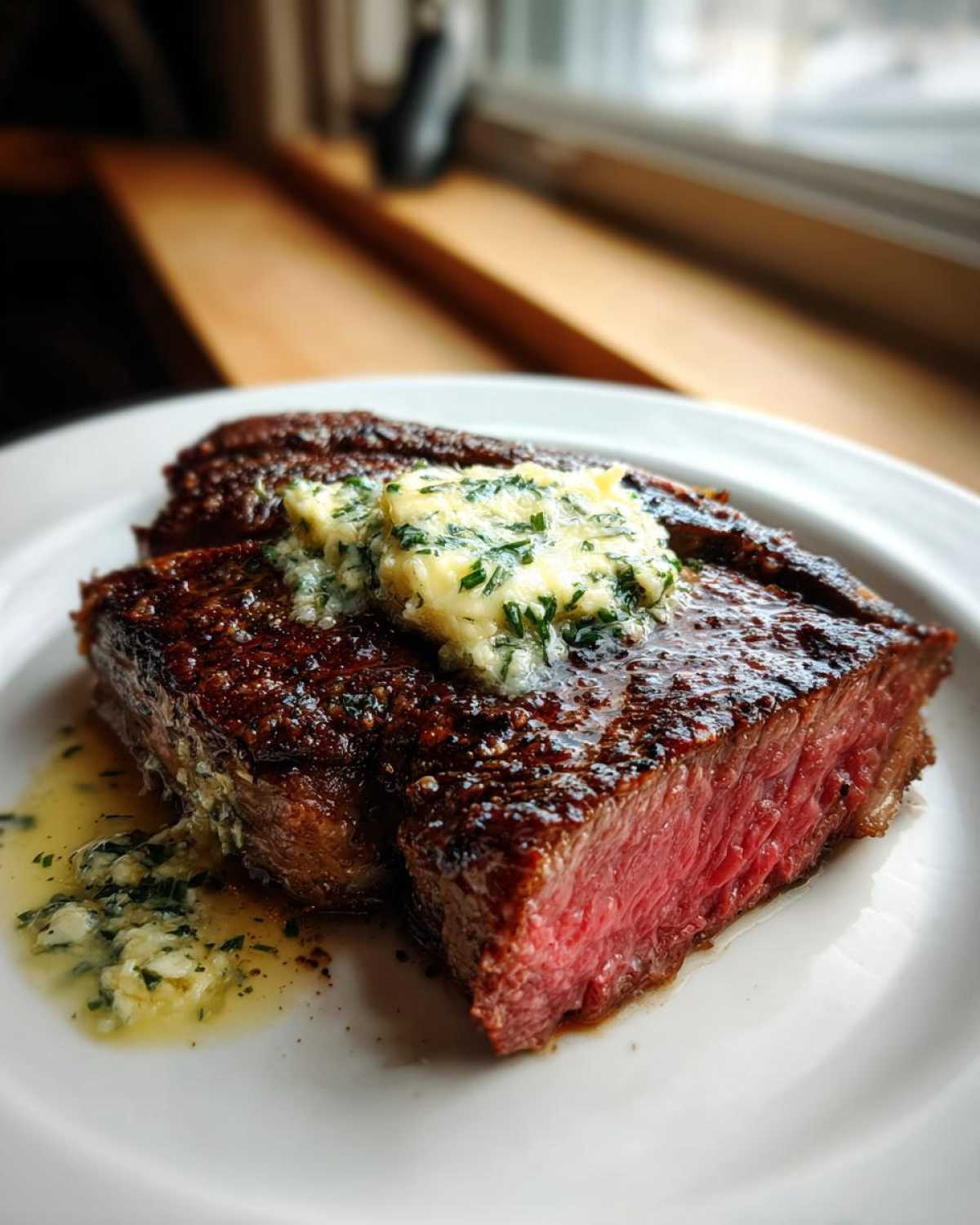
Keep that hot zone *hot*, and stick to those two or three minutes per side for searing. Once you move it to the cool zone to finish, you should barely get any more grey banding at all. It takes practice, but once you get the feel for your grill’s temperature zones, this just won’t happen anymore!
Storage and Reheating Instructions
So, you actually managed to have leftovers! That’s a rare feat around my house when I grill a Perfectly Grilled Ribeye Steak with Garlic Butter, but hey, sometimes we can’t finish a massive thick-cut steak in one night. Storing leftover steak correctly is important because nobody wants dry, sad meat the next day, right?
The best way to keep it fresh is to seal it up tightly. Wrap the whole, unsliced steak in plastic wrap, and then put that wrapped steak into an airtight container or a zip-top bag. Pop it into the fridge. Honestly, any leftover steak is best eaten within two or three days, maximum. The marinade or garlic butter we put on top is fantastic, but it’s not a long-term preservative!
Reheating to Keep That Perfect Doneness
Now, here’s the tricky part: reheating a steak without turning it into shoe leather. If you try to blast it in the microwave, you’ll just end up steaming it, and frankly, it’s a tragedy. We want to bring that internal temperature back up gently.
For a whole steak, I honestly recommend using a low oven—somewhere around 250°F. Lay the steak on a small wire rack set inside a baking sheet. This lets the heat circulate all the way around. Toss a splash of water or beef broth into the bottom of the pan and tent the steak loosely with foil. You’re just looking to warm it through, not cook it more! Pull it when the internal temperature is about 10 degrees below your desired finished temperature.
The Sliced Steak Trick
If you’ve already sliced the steak against the grain (which, I hope you did!), reheating is even faster and often better. Instead of warming the whole thing, just toss the slices quickly in a hot skillet over medium heat for maybe 45 seconds per side. Don’t let them sit there! Or, even better, melt a *tiny* fresh pat of plain butter or just a drizzle of olive oil in the pan, throw those slices in for just 30 seconds to coat them, and pull them immediately. That little bit of fresh fat keeps them glistening and moist. It works like a charm for lunchtime leftovers!
Estimated Nutritional Data
Okay, so we’ve got the flavor down, we’ve got the technique perfect, but let’s just take a quick look at what we’re eating here. When you’re flipping a massive, thick-cut ribeye steak and topping it with that rich garlic butter, you know you’re in for a treat, but it’s usually not a low-calorie event! I always tell people to check the nutrition section on recipes like this, but please remember these numbers are just my best guesses based on standard ingredient measurements. They aren’t legally binding, okay? We want to enjoy this restaurant-quality meal without stressing too much about the specifics!
These estimates are calculated per serving, which means one glorious half of that big, beautiful ribeye plus some of that melted compound butter. If you’re going for a leaner cut or skipping the butter, your numbers will obviously look very different. Also, make sure you read my full site disclaimer just in case you are tracking macros super strictly; you can find that over here.
- Serving Size: 1 steak (half the recipe)
- Protein: Wow, look at that! About 50 grams of protein per serving. That’s why this steak is so satisfying!
- Calories: We’re looking at right around 750 calories for the steak and the butter combined.
- Fat: This is where the ribeye shines (and where the butter really adds up)—about 60 grams total, with 30 grams coming from the saturated fat in that beautiful butter and the steak’s marbling.
- Carbohydrates: Virtually none! Just 1 gram, mostly from the herbs we added to the butter.
- Sodium: This is higher, close to 1100mg, because we seasoned the steak so heavily with kosher salt before grilling, which is what gives us that amazing crust.
- Cholesterol: Estimated at 200mg.
So yes, it’s decadent, it’s rich, and it’s exactly what you want when you successfully master the **Perfectly Grilled Ribeye Steak with Garlic Butter**!
PrintPerfectly Grilled Ribeye Steak with Garlic Butter
Follow these steps to grill a thick-cut ribeye steak to medium-rare perfection, complete with a flavorful homemade garlic butter.
- Prep Time: 60 min
- Cook Time: 20 min
- Total Time: 80 min
- Yield: 2 servings
- Category: Dinner
- Method: Grilling
- Cuisine: American
- Diet: Low Fat
Ingredients
- 2 (1.5-inch thick) ribeye steaks
- 2 tablespoons coarse kosher salt
- 1 tablespoon black pepper
- 1 tablespoon olive oil
- 1/2 cup (1 stick) unsalted butter, softened
- 4 cloves garlic, minced
- 1 tablespoon fresh parsley, chopped
- 1 teaspoon fresh thyme leaves
Instructions
- Remove steaks from the refrigerator 1 hour before cooking. Pat them completely dry with paper towels.
- Season both sides of the steaks heavily with kosher salt and black pepper.
- Prepare the grill for two-zone cooking: create a hot side (direct heat) and a cooler side (indirect heat). For charcoal, push coals to one side. For gas, set one side to high and the other to medium-low. Aim for a grill temperature around 450°F on the hot side.
- Mix the softened butter, minced garlic, parsley, and thyme in a small bowl to create the garlic butter. Set aside.
- Brush the steaks lightly with olive oil.
- Sear the steaks directly over the hot side of the grill for 2 to 3 minutes per side until a deep brown crust forms.
- Move the steaks to the cooler side of the grill. Close the lid and cook until the internal temperature reaches 125°F for medium-rare. This usually takes 5 to 8 minutes, depending on thickness.
- Remove the steaks from the grill when they reach 125°F internal temperature.
- Place a generous slice of the garlic butter on top of each hot steak immediately.
- Let the steaks rest uncovered on a cutting board for 10 minutes before slicing against the grain.
Notes
- For the best sear, make sure your grill grates are clean and very hot before placing the steaks down.
- If using a charcoal grill, avoid flare-ups by moving the steak away from direct flames when they occur.
- Use a reliable meat thermometer inserted into the thickest part of the steak for accurate doneness readings.
Nutrition
- Serving Size: 1 steak
- Calories: 750
- Sugar: 0
- Sodium: 1100
- Fat: 60
- Saturated Fat: 30
- Unsaturated Fat: 30
- Trans Fat: 1
- Carbohydrates: 1
- Fiber: 0
- Protein: 50
- Cholesterol: 200