

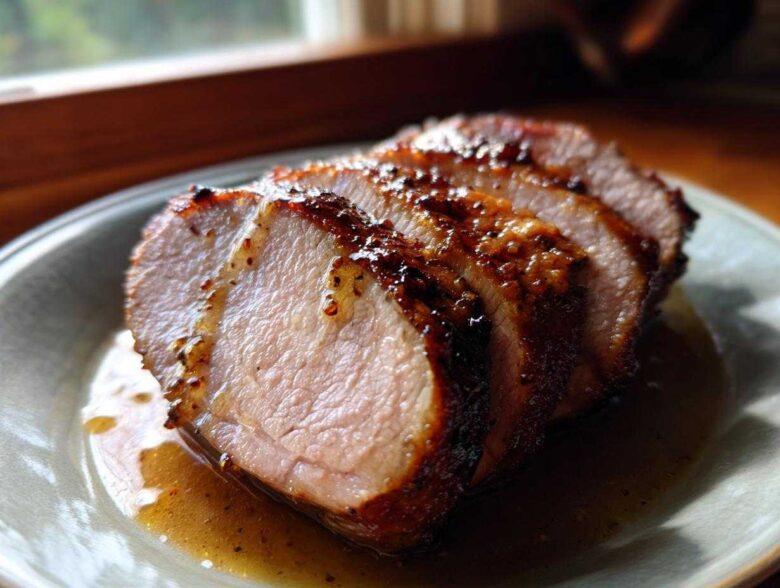
Okay, stop what you’re doing. If there’s one cut of meat that people are truly afraid to cook, it’s pork loin roast. They think it comes out dry, flavorless, or turns into shoe leather no matter what they do. Trust me, I’ve been there—I once carved a roast that squeaked! But after years of testing temperatures in my kitchen, I finally cracked the code for a wonderfully juicy pork loin roast that’s perfect.
This isn’t some fussy, complicated recipe that requires soaking herbs for three days. Honestly, it’s so straightforward you can absolutely pull this off for a weeknight dinner, but it tastes impressive enough that it’s my go-to for a relaxed Sunday roast recipe. The secret? It’s all about the temperature control. Once you nail hitting that perfect internal temp just right, you are going to get the most tender, crave-worthy meat you’ve ever made at home.
Why This Simple Pork Loin Roast Delivers a Juicy Pork Loin
I know we just talked about how scary cooking this meat can be, but this specific pork loin roast recipe is designed to eliminate all that fear. We aren’t using marinades or complicated injections here. We rely on simple, quality rubs and laser-focused timing.
When you follow the steps below, you get incredible results:
- It uses fewer than ten ingredients, so cleanup is a breeze!
- The two-stage roasting method locks in juices for an unbelievably juicy pork loin every single time.
- The temperature guidance is precise, meaning no guesswork about being undercooked or overcooked. Trust the thermometer, and you’ll be rewarded.
Perfect for an Easy Pork Dinner or Sunday Roast Recipe
The best part is how flexible this is. If you’re rushing on a Tuesday, this is a fantastic easy pork dinner that finishes up faster than takeout. But honestly, when I make this, I always feel like I’m sitting down to a gorgeous sunday roast recipe. It just looks and smells special!
Ingredients Needed for Your Juicy Pork Loin Roast
You’ll be amazed at how little you need to make this roast shine. Seriously, it’s all about the quality of the core meat and these simple pantry staples. Don’t feel like you need a huge spice rack for this one!
Here is what you need right before we get baking:
- A nice, plump 3 lb pork loin roast, bone out. Make sure it’s trimmed up nicely.
- 1 tablespoon of good quality olive oil—just enough to get that seasoning to stick!
- 1 teaspoon of salt. We need the crust!
- 1/2 teaspoon black pepper. Freshly cracked is best, if you have it.
- 1/2 teaspoon garlic powder—this is for background depth.
- 1/4 teaspoon dried thyme—a tiny bit of earthiness works wonders with pork.
That’s it! Simple seasoning means the flavor of the pork itself really gets to take center stage in this juicy pork loin.
Step-by-Step Instructions for Oven Roasted Pork
Alright, let’s get muddy! This is where the magic happens for your oven roasted pork. The first thing you absolutely must do, no exceptions, is get that oven cranking up to 400 degrees Fahrenheit. We need serious heat to start building that crust on the pork loin roast.
Next, grab those paper towels. You want the surface of the pork loin aggressively dry. I mean bone-dry! Any moisture just steams instead of searing, and we want a beautiful brown exterior, right? Blot, blot, blot!
Preparing the Seasoning and Rub for the Pork Loin Roast
While the oven is heating up, take a tiny little bowl—don’t use a big one, nobody wants to wash extra dishes!—and whisk together your salt, pepper, garlic powder, and dried thyme. Give it a good stir so everything is evenly distributed.
Now, drizzle that olive oil all over the roast. Use your hands to rub it in completely; it acts like the glue for our seasoning. Sprinkle that herb mix everywhere, remembering to pat it gently so it adheres well. Here’s my favorite little trick for the best crust: if you have an extra 30 minutes, let the seasoned roast sit out on the counter for a little bit. It evens out the temperature, which helps the whole roast cook more evenly. If you’re pressed for time, just jump straight to the oven, though!
The Critical Roasting Stages and Achieving the Right Pork Loin Internal Temp
Pop that seasoned pork loin onto a roasting pan or a rimmed sheet. We’re going to hit it hard for 15 minutes at that 400°F we preheated to. This blast sets the flavor layer.
Once those 15 minutes are up, you need to immediately turn the oven down to 350 degrees Fahrenheit. Now, this is key for a juicy pork loin: keep roasting, but keep checking that temperature. You are aiming for exactly 145 degrees Fahrenheit inserted right into the thickest spot. Nothing more, nothing less! That final pork loin internal temp reading is what saves your roast from drying out.
The Non-Negotiable Resting Period for Your Pork Loin Roast
Okay, you pulled the roast out, and your instant-read thermometer says 145°F. Big congratulations! You are *so* close to perfection. But if you grab the carving knife right now and slice into that beautiful meat, I’m going to be very disappointed in you!
Seriously, this resting step is the biggest secret to keeping that meat juicy. When meat cooks, all those gorgeous juices—the ones we worked so hard to keep inside—are pushed right into the center. If you cut it immediately, all that moisture just floods out onto your cutting board, leaving you with drier slices.
You have to give those juices time to migrate back into all the muscle fibers. It’s like letting a crowd settle down after a noisy party!
Here’s what you do. Grab a piece of aluminum foil, don’t wrap it tightly—just loosely tent it over the roast. This keeps the outside from cooling down too quickly while allowing the inside to relax. Set it on your cutting board and time yourself for 10 full minutes, up to 15 if your roast was really big. I usually use that time to quickly make my sauce or just sneak a taste of one of the outer slices. Don’t skip this, ever!
Making a Simple Pan Sauce Gravy for Your Pork Loin Roast
You have rested your glorious meat; now it’s time for the best part that costs almost nothing: the pan sauce gravy! Don’t even think about opening a jar of store-bought brown gravy. Look at the bottom of the roasting pan you used for your pork loin roast. See those little dark brown bits stuck down there? That’s pure, unadulterated, concentrated pork flavor. That’s liquid gold!
You need to get that flavor into your sauce. First, take that pan—carefully!—and put it right onto the stovetop over medium heat. You want to scrape up every single one of those caramelized pieces stuck to the bottom. I use a wooden spoon for this, just gently working them loose while the pan heats up.
Once you’ve scraped what you can, pour in about one cup of chicken broth. Seriously, just regular store-bought chicken broth works perfectly here. Let it bubble away and simmer gently. You’ll see the liquid start to bubble down and turn darker as it absorbs those flavorful bits. We want to reduce it by about half, which takes maybe five minutes.
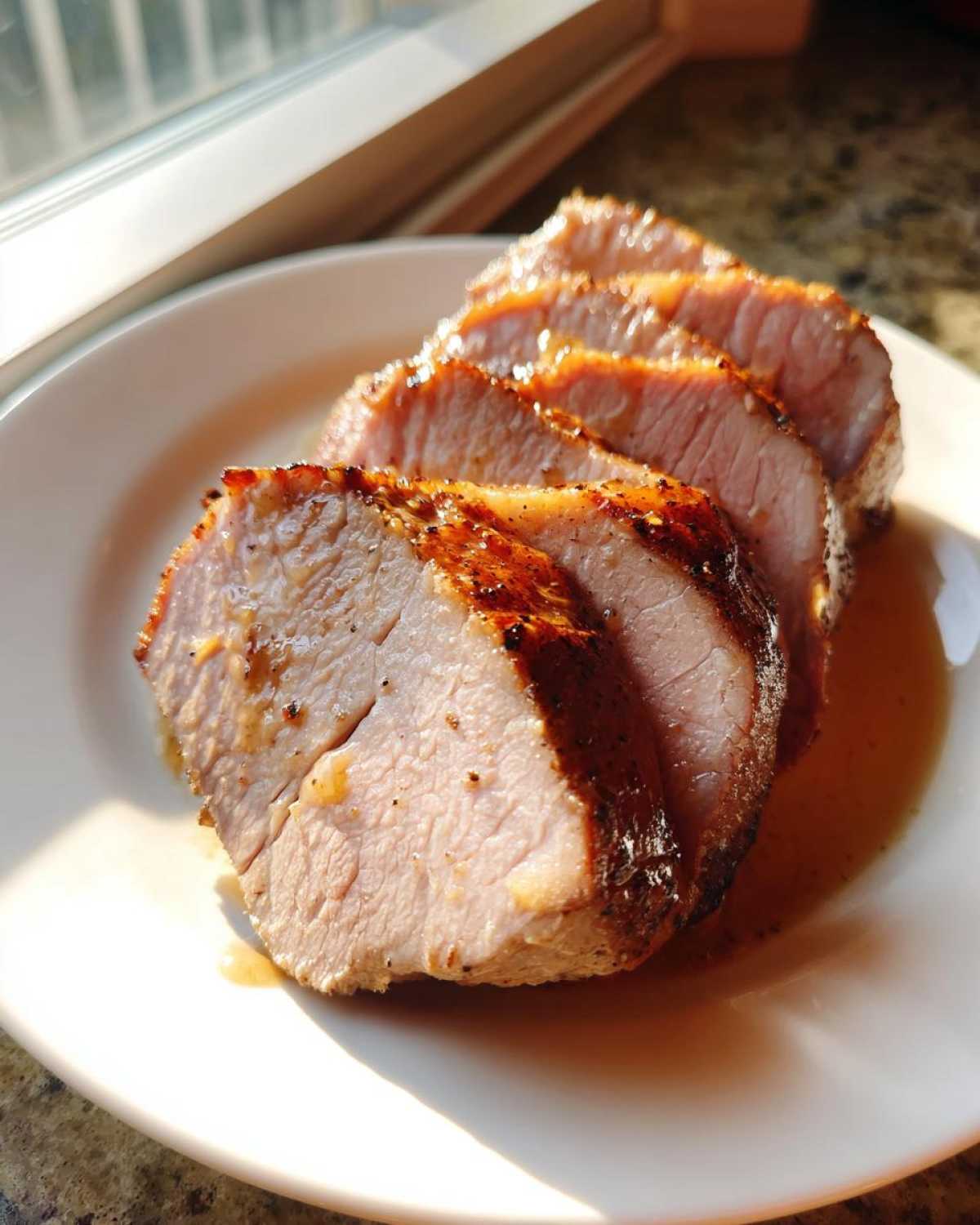
If you like your sauce a little thicker, which I usually do for an ultimate pork loin roast experience, I have a little trick. Grab a tiny bowl and whisk in one teaspoon of cornstarch with two teaspoons of cold water until it’s completely smooth—that’s called a slurry. Whisk that tiny mixture into your simmering sauce. It will thicken up almost instantly! Give it a taste, add a tiny pinch more salt if you need it, and then pour that beautiful homemade sauce right over your freshly sliced meat.
Tips for the Juiciest Pork Loin Roast Every Time
Want to take this amazing roast from “great” to “neighbor-asking-for-the-recipe” status? It’s all about these little extra steps that serious cooks use. Since we mastered the two-stage temperature above, we can move on to making sure the exterior is absolutely perfect when you pull this pork loin roast out of the oven. These are the things I learned over trial and error that really make a difference in the final texture!
My biggest piece of advice for any roast, especially one that you want to be a showstopper for your oven roasted pork, is to think about crust development. A crust traps everything inside, and that’s how we guarantee that lovely tender outcome later on.
Searing for a Better Crust on Your Oven Roasted Pork
If you have an oven-safe skillet—like a cast iron pan—and you want that incredible, deep brown color and a slightly crispy exterior layer, you *must* sear it first. Trust me, this extra five minutes of work makes your juicy pork loin look professional!
The technique is simple: Heat your skillet on the stovetop until it’s smoking hot. Add just a tiny bit more olive oil, and carefully place your seasoned pork loin right into the hot pan. You want to sear all sides—top, bottom, and the two long sides—for just about 2 minutes each. You’re looking for a nice, deep golden color, not cooking it through!
Once all sides are seared, simply transfer that entire skillet right into the preheated 400°F oven to start the two-stage cooking process we talked about earlier. It’s an awesome trick for making any easy pork dinner look like you spent hours on it!
And a final reminder about the heat: always remember carryover cooking. That 145°F measurement is vital, but once you pull that pork loin roast out, the temperature keeps climbing by a degree or two while it rests. That’s why we take it out right at 145°F—it will gently coast up to 147°F or 148°F during the tenting time, ensuring it stays perfectly medium and tender inside!
Serving Suggestions for Your Easy Pork Dinner
Now that you have this incredibly tender, perfectly seasoned roast, what are we going to put next to it on the plate? This is the fun part of any easy pork dinner—deciding on the supporting cast! Since the main star is so simple and savory, you have tons of room to play with bright, sweet, or creamy sides.
I always recommend something starchy to soak up those last little drops of that pan sauce gravy we just made. My absolute favorite pairing is a big bowl of creamy mash. If you want something a little lighter than traditional potatoes, you have to try making my roasted garlic cauliflower mash with butter. It feels decadent but sneaks in those veggies!
For the vegetable portion, you need something that brings a little sweetness to cut through that rich flavor. Root vegetables are just magical next to roast pork. If you’re serving this on a chilly evening or a holiday, you can’t go wrong with sweet carrots. I often whip up a batch of maple glazed carrots with thyme—the maple glaze really complements the hint of thyme we put on the meat.
If you’re serving this up on a weeknight and need something faster, even simple steamed green beans tossed with a squeeze of lemon juice work wonderfully. Whatever you choose, just make sure you have something to sop up that amazing sauce from the bottom of the plate. That’s the real indicator of a successful roast dinner!
Frequently Asked Questions About Your Pork Loin Roast
I get so many questions about roasting pork, especially when people are trying to fit it into their busy schedules. If you were looking for answers about time or temperature management, you’re in the right spot! Here are the ones I hear most often when people are planning their easy pork dinner.
How long does a 3 lb pork loin roast take to cook?
That’s the million-dollar question, isn’t it? For our recipe, remember we do that initial blast at 400°F for 15 minutes to get things started fast. After that, when we drop the heat to 350°F, you are looking at about 15 to 20 minutes per pound. So for a 3 lb roast, you’re probably looking at another 45 to 60 minutes after that initial heat spike. But please, please, listen to your thermometer instead of the clock! That’s the only way to guarantee a juicy pork loin.
What is the safest pork loin internal temp for serving?
For safety, the USDA recommends cooking pork to a minimum of 145 degrees Fahrenheit. That’s exactly the pork loin internal temp we are aiming for when you pull it out of the oven. Once you hit 145°F, the roast needs that mandatory 10 to 15 minutes of resting time under foil. That resting period allows the juices to settle back in. You might even see the temperature creep up another degree or two while it rests, which is totally fine and keeps it perfectly tender!
Can I make this pork loin roast ahead of time?
Yes, you totally can! This is one reason why it’s such a great sunday roast recipe—you can cook it on Sunday, and have leftovers all week. Once the roast is completely cooled down, slice it up and store it in an airtight container in the fridge. It’s good for about four days. When you reheat it, use a low oven temperature, like 300°F, and put a splash of chicken broth or water in the bottom of the roasting dish before covering it with foil. That little bit of steam keeps your leftovers juicy!
Storing Leftovers of Your Perfect Pork Loin Roast
I’m going to let you in on a little secret: sometimes, the leftovers from the pork loin roast are even better than the first night! Reheating pork can be tricky because that beautiful juiciness can disappear quickly if you just toss it in the microwave. We want to treat these leftovers gently because they deserve it after all the work we put into hitting that perfect internal temperature the first time around.
First step, and this is essential: make sure the roast has cooled down completely before you try to store it. If you put warm meat into an airtight container, you’re just creating a sauna for bacteria, which is definitely not what we want for our juicy pork loin!
Once fully cool, slice up the remaining meat against the grain—you know, just like you did for dinner!—and pack those slices tightly into a good, sturdy airtight container. It should keep beautifully well in the fridge for about four days. If you’re planning on this for next week’s lunches, I highly recommend this method.
Now, here’s the trick for reheating leftovers—because no one likes dry pork for lunch! When you’re ready to eat, forget the microwave if you can (unless you’re eating just one thin slice). The best way to warm up your leftover pork loin roast is in a low oven or even covered in a skillet on the stovetop.
If you are using the oven, put your slices in a baking dish. Before covering it back up with foil, add just a tablespoon or two of liquid to the bottom of the dish. My go-to is leftover pan sauce or even just plain chicken broth. Pour it around the edges, not directly over the meat. Cover tightly and heat at a *very* low temperature, around 300°F, until it’s just warmed through. That little bit of steam works wonders to protect the texture and keep your leftovers tasting almost as fresh as the day you carved the whole roast!
PrintSimple Juicy Pork Loin Roast
A straightforward recipe for a tender and juicy oven-roasted pork loin with simple seasoning and instructions for a basic pan sauce.
- Prep Time: 10 min
- Cook Time: 75 min
- Total Time: 85 min
- Yield: 6 servings
- Category: Dinner
- Method: Roasting
- Cuisine: American
- Diet: Low Fat
Ingredients
- 3 lb pork loin roast, bone out
- 1 tablespoon olive oil
- 1 teaspoon salt
- 1/2 teaspoon black pepper
- 1/2 teaspoon garlic powder
- 1/4 teaspoon dried thyme
Instructions
- Preheat your oven to 400 degrees Fahrenheit.
- Pat the pork loin dry with paper towels.
- In a small bowl, mix the salt, pepper, garlic powder, and thyme.
- Rub the olive oil over the entire surface of the pork loin.
- Sprinkle the seasoning mix evenly over the pork loin, pressing gently to adhere.
- Place the roast in a roasting pan or on a rimmed baking sheet.
- Roast for 15 minutes at 400 degrees Fahrenheit.
- Reduce the oven temperature to 350 degrees Fahrenheit and continue roasting until an instant-read thermometer inserted into the thickest part reads 145 degrees Fahrenheit. This usually takes about 15-20 minutes per pound.
- Remove the roast from the oven when it reaches 145 degrees Fahrenheit.
- Tent the roast loosely with foil and let it rest on a cutting board for 10 to 15 minutes before slicing.
- While the pork rests, make a simple pan sauce by placing the roasting pan on the stovetop over medium heat. Scrape up any browned bits from the bottom of the pan. Add 1 cup of chicken broth and simmer until reduced by half, stirring occasionally. You can whisk in a teaspoon of cornstarch mixed with water to thicken if desired.
- Slice the pork loin against the grain and serve with the pan sauce.
Notes
- For the juiciest results, remove the pork when the internal temperature hits 145 degrees Fahrenheit; carryover cooking will bring it up slightly higher during resting.
- If you prefer a crispier exterior, you can sear the roast in an oven-safe skillet on all sides before placing it in the oven.
Nutrition
- Serving Size: 4 oz cooked
- Calories: 280
- Sugar: 1
- Sodium: 450
- Fat: 12
- Saturated Fat: 4
- Unsaturated Fat: 8
- Trans Fat: 0
- Carbohydrates: 0
- Fiber: 0
- Protein: 40
- Cholesterol: 95